Are We Drifting?
Spiritual Drift, Apostasy, and the Grace That Calls You Back
Read the Overview ↓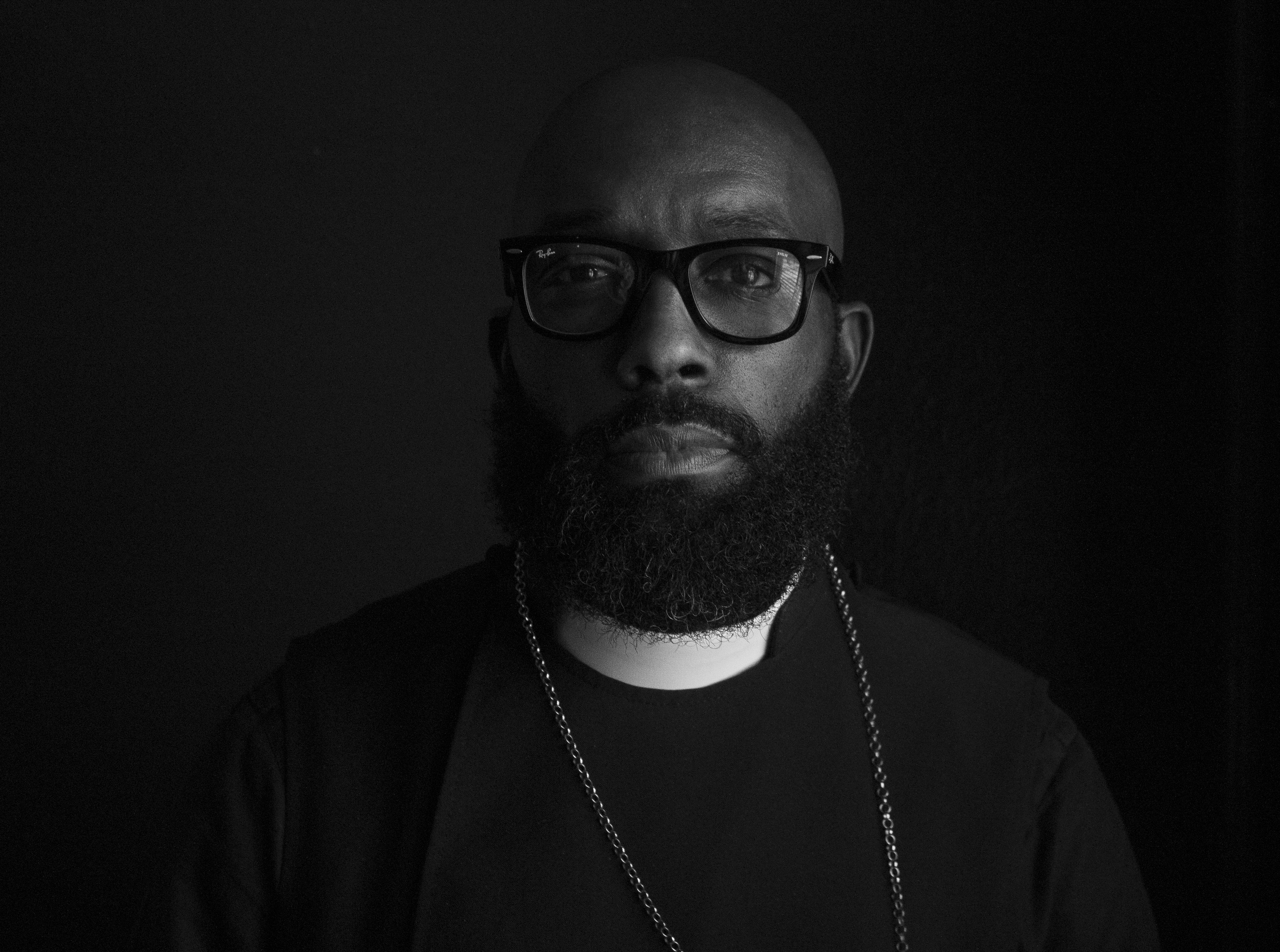
Where This Came From
The series "Are We Drifting?" at The MarketPlace Movement ran from April through May 2026. Over six sessions Bishop Robert W. Lyons, Jr. walked through Hebrews 6:1–8, tracing the anatomy of spiritual departure from its passive beginning to its terminal end. What the messages could do on a Sunday morning was open the diagnosis. What they could not do was lay out the full architecture.
This book is that architecture.
The series asked the question. The book builds the case. It takes the same theological ground the series covered and goes to the foundations: the structure of salvation itself, the mechanism by which the Spirit is first grieved and then quenched and finally blasphemed, the Trinitarian grounding of the unpardonable sin, and the governing boundary that keeps this entire framework from becoming a tool of human condemnation.
What follows is an overview of the argument. Not a summary. An orientation. The kind of reading that tells you what you are entering before you enter it.
View the Series Archive →The Argument
The Architecture of Salvation
Every argument about spiritual drift has to begin somewhere. This one begins with salvation's structure, because the question of whether drift is possible, and whether it is serious, depends entirely on what you believe salvation is.
The governing framework is tripartite: salvation consists of three non-collapsible stages. Justification is what God declares about you the moment you come to faith. Glorification is what God will do with your body and your entire person at the resurrection. Sanctification is the middle term, the required stage between the first and the third, in which the soul is progressively conformed to the character of Christ through the active work of the Holy Spirit and the genuine cooperation of the will.
The word required carries weight. It means sanctification is not optional, not automatic, and not merely the visible fruit of a salvation that would have happened anyway. The Wesleyan-Holiness tradition has always insisted that sanctification stands as a genuine moral demand, not a guaranteed outcome detached from human participation. The Reformed alternative, in which sanctification inevitably follows from justification as its necessary fruit, removes the moral seriousness that makes warnings about drift coherent. If sanctification always happens to the genuinely justified, then the warnings in Hebrews are either hypothetical or aimed at the never-truly-saved. This book argues both readings are wrong.
The critical precondition is free will, restored by prevenient grace and awakened by regeneration. God's grace does not override the will. It restores the will's capacity to respond. And from that point forward, the soul's ongoing cooperation with grace is both genuine and required. Without this precondition, the drift continuum has no moral seriousness. A person drifting mechanically is a person who bears no real responsibility for where they end up. That is not the picture the New Testament paints.
Sanctification is not optional, not automatic, and not merely the visible fruit of a salvation that would have happened anyway.
The second critical claim is what sanctification's existence as a required stage implies. If there is a middle term, something is at stake if the middle term is refused. The existence of the stage implies the possibility of its neglect. And the possibility of neglect is precisely where the drift continuum begins.
How Drift Begins
Aviation has a rule: one degree of navigational error, sustained over a long distance, produces a displacement that is catastrophic at the destination but completely invisible at the start. One degree off course is not a crisis at takeoff. At landing, you are in the wrong city.
The entry point of the drift continuum is neglect. The Greek term is amelesantes, used in Hebrews 2:3: "How shall we escape if we neglect so great a salvation?" The term describes passive omission, not active hostility. Nobody decides to neglect. Neglect happens when attention is not deliberately directed. The wedding guest in Jesus' parable who paid no attention when the king's invitation came was not treated as innocent. He was not hostile. He simply did not give the invitation the weight it deserved. The consequence was the same as if he had refused.
This matters because most people who have drifted do not know they started drifting. The drift begins in the space of ordinary life, in the small consistent choices about where attention goes and where it does not. A person does not wake up one morning and decide to neglect the sanctifying work of the Spirit. They wake up one morning and discover, if they have the courage to look, that the attention has been elsewhere for a very long time.
Neglect happens when attention is not deliberately directed. The wedding guest who paid no attention was not treated as innocent.
From neglect, the continuum moves to drift proper. Drift compounds. It accelerates. It becomes increasingly invisible from the inside as it progresses. Early in the process, the gap between where you are and where you should be is small enough to be rationalized away. By the time the gap is large enough to be undeniable, the capacity to perceive it accurately has already been compromised by the drift itself.
From drift, the continuum reaches backsliding. The book is careful here, drawing a distinction that pastoral practice often collapses. Backsliding is a milestone on the continuum, not a synonym for apostasy. Jeremiah 3:14 calls Israel a backslider and in the same verse announces that God is still married to her. The backslider has not yet passed the point of no return. It is a marked, serious position signaling dangerous proximity to the terminal stages. It is not yet the end.
The distinction matters for pastoral reasons. If every backslider is treated as an apostate, the door of return is closed before it is actually closed. If every backslider is treated as merely temporarily wayward, the urgency of intervention is lost. The continuum gives us the categories we need to calibrate both urgency and hope appropriately.
What Drift Does to the Soul
There is a passage in Ephesians 4 that the drift framework cannot be understood without. In verses 17 through 19, Paul describes the condition of people who have given themselves over to futility of mind. He uses two terms: hardening and darkening. The darkening of understanding is the effect. The hardening of the heart is the cause. These are sequential, not simultaneous. Hardening produces darkening. The faculty of moral and spiritual perception degrades as the condition of the heart deteriorates.
This is not a description of people who were never believers. It is a warning to people who are. Paul tells the Ephesian church not to live as the Gentiles live, implying that living that way is a possibility he takes seriously. And the same chapter contains the warning not to grieve the Holy Spirit (verse 30). This is not an accident in the structure of the passage. The Ephesians 4 progression from hardening to darkening, in a letter that also commands us not to grieve the Spirit, is architecturally significant.
What hardening and darkening mean practically is that the soul's perceptual capacity for spiritual reality diminishes under sustained neglect. This does not happen overnight. It is a process. And part of what makes it so dangerous is that as perception diminishes, the person's confidence in their own spiritual condition often remains unchanged. The drift is invisible from the inside precisely because the instrument of perception is the thing that is being damaged.
The drift is invisible from the inside precisely because the instrument of perception is the thing being damaged.
There is a pastoral corollary here that belongs in any serious engagement with this material: early intervention matters not only because it is easier to address drift early, but because early in the drift, ignorance is still a recoverable condition. The epistemic window is still open. There is still the possibility of honest self-examination producing honest self-perception. As the drift advances and the hardening progresses, that window narrows. This is why the warnings in Hebrews carry such urgency. They are trying to reach people while reaching is still possible.
The Terminal Stages
The book devotes its most exegetically detailed work to the two terminal stages of the continuum: apostasy and reprobacy. Both passages, Hebrews 6 and Romans 1, are given careful treatment.
The key term in Hebrews 6:6 is parapiptoo, a hapax legomenon, a word that appears only once in the entire New Testament. The choice of this particular word matters. Parapiptoo describes a lateral departure from a path. It is not piptoo, which describes a stumble or a fall along the path. A just person can fall seven times and rise again (Proverbs 24:16). Apostasy is categorically different: it is a departure from the path itself, not a fall along it.
The impossibility Hebrews 6 describes is structural. It is not that God is unwilling to restore the apostate. It is that the mechanism of restoration cannot be reapplied. The crucifixion was once for all (ephapax). Post-cross apostasy operates on different covenantal ground than Peter's denial. Peter denied Christ before the cross and was restored through the same sacrifice he had denied. The apostate who has received the full benefits of the cross and then consciously and deliberately turned away cannot be restored through a mechanism that has already been applied and rejected. The impossibility is structural, not motivational.
Reprobacy (adokimos in Romans 1:28) adds a metallurgical dimension. The term describes metal that has failed the assay, metal that has been tested and found counterfeit. The word presupposes prior submission to testing. You cannot be rejected as counterfeit without first being presented for evaluation. The person who was never in proximity to the refiner's fire is not described by this term.
The verb Paul uses three times in Romans 1 is paradidomi, to hand over. God handed them over. Not passively. The active voice is deliberate: God, as the active judicial subject, handed them over to their own desires. This is judicial action. It presupposes prior proximity. You cannot be handed over as a judicial act without first having been in a position where the judicial act was relevant.
The reprobate's condition has a two-horizon structure. The judicial declaration happens in time, in this life. The execution happens at the eschatological tribunal. This parallels the structure of glorification: the righteous soul's condition is confirmed in time through sanctification, executed at the eschatological tribunal in the resurrection. These are structural parallels. They run in opposite directions but have the same architecture.
The Spirit and the Drift
The pneumatological dimension of the drift continuum is the book's most theologically original contribution. The Holy Spirit is not merely present in the background of the drift narrative. The Spirit is the active agent, power, and executor of sanctification. To neglect sanctification is to neglect the Spirit's work. And the continuum of drift maps onto a three-stage pneumatological trajectory with its own internal logic.
The three stages are grieving, quenching, and blaspheming.
Grieving the Spirit (Ephesians 4:30) corresponds to the early stages of drift. The Spirit is still present. The Spirit is still working. But the patterns of neglect and sin are producing a response in the Spirit that Paul describes as grief. This is not God withdrawing. The Spirit grieves precisely because the Spirit remains present and is watching what is happening. Grief is the response of love to a choice it cannot stop but cannot endorse.
Quenching the Spirit (1 Thessalonians 5:19) is the middle stage, the bridging point between the early stages and the terminal condition. Paul's command is stark: do not quench the Spirit. The Spirit is compared here to a fire. Fire can be suppressed. The active, ongoing suppression of the Spirit's work is what quenching describes. And quenching is possible only where there was first something to quench. You cannot suppress what was never present.
The Spirit grieves precisely because the Spirit remains present and is watching what is happening. Grief is the response of love to a choice it cannot stop but cannot endorse.
Blaspheming the Spirit (Matthew 12:31–32) is the terminal stage. What is distinctive here is the epistemic element. When the religious leaders attributed the works of the Spirit to Beelzebul, they were not making a mistake. They knew what they were seeing. The Spirit's works are self-attesting in a way that left no genuine room for doubt to someone who had sufficient proximity to evaluate them. The blasphemy against the Spirit is the full, deliberate, knowing rejection of a God whose works were undeniable. There is no appeal category available afterward because every appeal, every avenue of repentance, prayer, and intercession, runs through the God that was wholly and knowingly rejected.
The book also draws the Trinitarian implication. The Spirit cannot be separated from the Father and the Son without violating the divine unity. The mutual indwelling of the persons means that to blaspheme the Spirit is not to reject one of three. It is to reject the Triune God. To blaspheme the Spirit is a Trinitarian rejection.
Who Holds the Separation
A framework this serious requires a governing boundary. Without one, it becomes a tool of judgment in the hands of people it was never designed to serve. This is not a speculative concern. Theological frameworks about apostasy and reprobacy have historically been weaponized: by church authorities against dissenters, by factions against each other, by individuals settling personal grievances under the language of doctrinal concern.
The boundary comes from the text itself.
In the Parable of the Wheat and Tares (Matthew 13:24–30), the servants ask the master if they should pull up the tares. The master says no. Wait until the harvest. Because in the pulling, you might uproot the wheat. The separation is coming. But no human agent appears in the separation sequence. The reapers are angels. The field is the world. The master is the Son of Man.
In the Parable of the Sheep and Goats (Matthew 25:31–46), the nations are gathered before the Son of Man, not before any ecclesiastical body, not before any bishop or council or denomination. The separation is made by the one with full knowledge of the interior condition of every soul. No human being has that knowledge.
The framework therefore has exactly three permitted uses. First, as a preaching framework: to announce the reality of the continuum and call people to respond while response is still possible. Second, as a tool for self-examination. Paul applies adokimos to himself in 2 Corinthians 13:5 as a warning to his own soul: "test yourselves to see if you are in the faith; examine yourselves." Third, as a pastoral diagnostic: to calibrate the urgency of intervention on behalf of someone in your care. Not to pronounce. To calibrate.
That is the boundary. The framework belongs in the pulpit, in the interior life of the believer, and in the pastoral relationship. The separation belongs to Christ alone.
The God Who Passes Through
The "Are We Drifting?" series closed with John 4. The book closes there as well, because the John 4 text does something the rest of the framework needed.
The framework traced the continuum from neglect to reprobacy. It named the stages, grounded them exegetically, and established the governing boundary. But the entire framework assumes a starting point: a person who was in covenant, who received the benefits of the Spirit's work, who then drifted from a truth they once held. That starting point describes a particular kind of person. It does not describe everyone in the room.
The Samaritan woman at the well was not a returning covenant member. She was a person at the margin where the drift of a people and the drift of a life had deposited her. She was coming to the well at noon because the community she might have belonged to was a community she had been excluded from or had excluded herself from. The framework does not reach her directly. She was never in the place to leave.
And yet John 4:4 records a fact: He had to pass through Samaria. In geographical terms, most Jewish travelers avoided Samaria entirely. Jesus did not avoid it. He went through it. And the word John uses, "had to," is not a logistical necessity. It is a theological one. He had to pass through Samaria because there was a woman at a well at noon who needed what only He could give, and He knew she would be there, and He went out of His way to be at the well when she arrived.
He had to pass through Samaria because there was a woman at a well at noon who needed what only He could give, and He knew she would be there.
The framework matters. The continuum is real. The warnings are serious and they should be preached seriously. But the same God who will not be blamed for the drift is the God who passes through the places where drifting people live. He does not come down to where the drift carried you. He says: Return to Me and I will return to you. But for the woman who never had the covenant to return to, He goes to where she is.
He has to.
The book ends there because the gospel has to end there. Not with a framework. With a God.
Bishop Robert W. Lyons, Jr.
Be Notified When It Releases
The book releases Q4 2026. Enter your email and you will be the first to know.
View the Series Archive →